Small-Space Botanical Cross-Stitch: Flowers, Succulents & Houseplants
By The Editorial Team · July 16, 2026
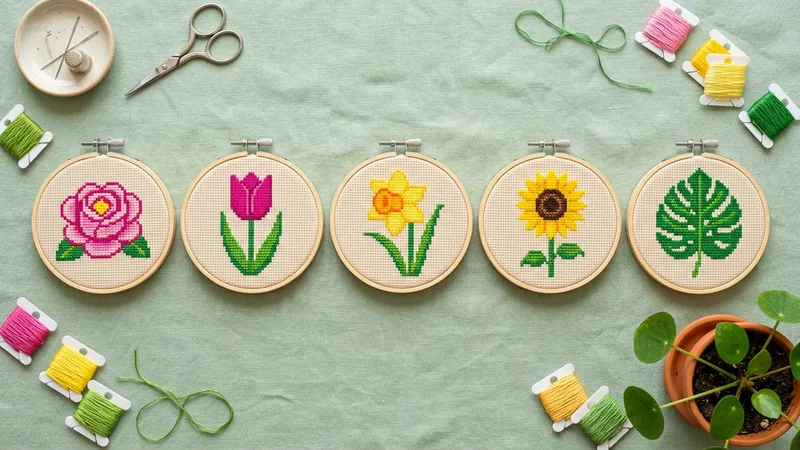
Houseplant collecting has turned into its own hobby over the last few years, and it’s spilling into how people decorate around their plants, not just what they grow. If your windowsill is already doing the work, a botanical cross-stitch piece is a low-maintenance way to bring that same energy to a wall that doesn’t get enough light for a real monstera.
Cut-Flower Motifs for Quick, Colorful Projects
A single stitched bloom is one of the fastest ways to get a finished piece on the wall without committing a full weekend. Our Pixel Rose and Pixel Tulip both work as one-flower statement pieces — the rose leans into shaded pink petals for a bit more challenge, while the tulip’s small stitch count makes it one of the fastest finishes in the whole collection. For something tied to a specific season, the Pixel Daffodil reads as an early-spring piece the moment it goes up, and the Pixel Sunflower does the same job for summer with a bolder, high-contrast palette that holds up from across a room.
If you want something that leans tropical rather than cottage-garden, the Pixel Hibiscus brings a five-petal red-and-pink bloom that’s a genuine change of pace from the usual rose-and-daisy rotation — most cross-stitch florals default to temperate garden flowers, so a hibiscus stands out precisely because it’s uncommon in charted patterns. For something quieter, the Pixel Bluebells design trades bold color for a muted, woodland palette that works well in a room where you don’t want the stitched piece competing with everything else on the wall.
The Houseplant Trio: Monstera, Bonsai, and Beyond
Collectible houseplants are one of the specific decor threads gaining traction going into 2026, with jungle foliage and unusual varieties treated less like background greenery and more like a display in their own right. Our Pixel Monstera Leaf is a direct response to that — the split-leaf silhouette is instantly recognizable to anyone who follows houseplant accounts, and stitching it is a way to get that same “look at my monstera” satisfaction on a wall that gets no natural light at all.
The Pixel Bonsai Tree sits in a different register — bonsai carries a slower, more deliberate association than a leafy houseplant, which makes it a better fit for a reading corner or a desk than a sunny kitchen window. It’s also one of the larger, more involved pieces in this collection, so it works well as the anchor project if you’re building out a full plant-themed gallery wall rather than hanging pieces one at a time as you finish them.
Choosing Between a Quick Stitch and a Statement Piece
Not every botanical pattern needs to be a weekend project. If you’re deciding what to start with, stitch count is the more reliable guide than subject matter — a small design like the tulip or daffodil gives you a finished piece to hang within a few sittings, while the bonsai or monstera asks for a real time investment in exchange for a genuinely larger finished size. There’s no wrong order to work through this collection, but starting small tells you quickly whether the pixel-art flat-color style is one you want to commit a bigger project to.
Our Recommendation
Start with the Pixel Tulip if you want a fast win, or the Pixel Monstera Leaf if you’re already deep into the houseplant hobby and want your wall to match your windowsill. Either way, pair it with the Pixel Bonsai Tree down the line for a two-piece “plant corner” that reads as a deliberate collection rather than a single random flower — and if you haven’t stitched from a chart before, our guide to reading a cross-stitch chart covers the basics these patterns build on.
Join us on Facebook
New free patterns every week, stitching tips, and a place to share what you've made.