How to Plan a Large Cross-Stitch Project (15,000+ Stitches)
By The Editorial Team · October 10, 2026
A 5,000-stitch pattern forgives a lot. Cut the fabric a little small, buy floss as you go, stitch in whatever order you like — it’ll still come together. Somewhere past 15,000 stitches that stops being true. The mistakes are the same ones, but they get expensive: a fabric piece that’s an inch too narrow, a dye-lot change halfway across a sky, a hoop crease through finished work. Here’s how to plan around them, using real charts from our catalog as examples.
Work Out the Fabric Before You Fall in Love With the Pattern
Finished size is stitch count divided by fabric count. Our Witch Kitten with Skull and Pumpkins is 256 x 238 stitches, so on 14-count Aida it’s 18.3“ x 17.0“ of stitching. Add at least 3“ on every side for framing and for the frame or Q-snaps to grip, and you need a piece around 24“ x 23“ — larger than most pre-cut Aida packs, so check before you start.
Going up a count shrinks it: the same chart is 16.0“ x 14.9“ on 16-count and 14.2“ x 13.2“ on 18-count. That’s a real option if the 14-count version is bigger than your wall, but smaller squares are harder on the eyes over 37,299 stitches. If you’re unsure which to pick, our guide to choosing your first cross-stitch fabric covers how each count feels to stitch.
Stitch Count Matters More Than Dimensions
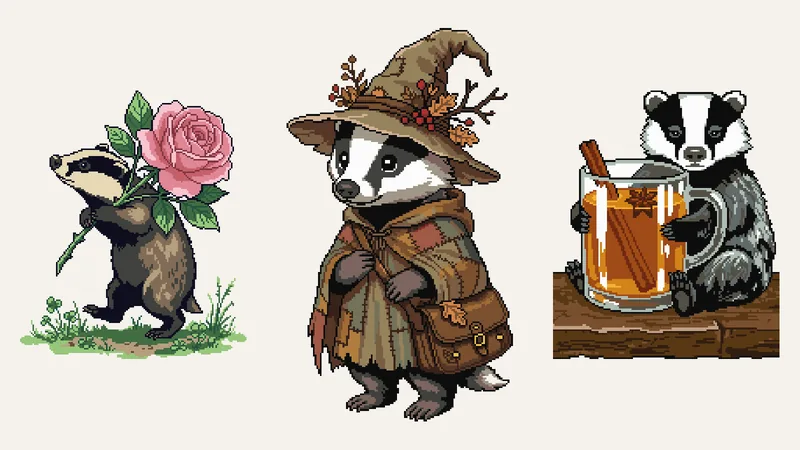
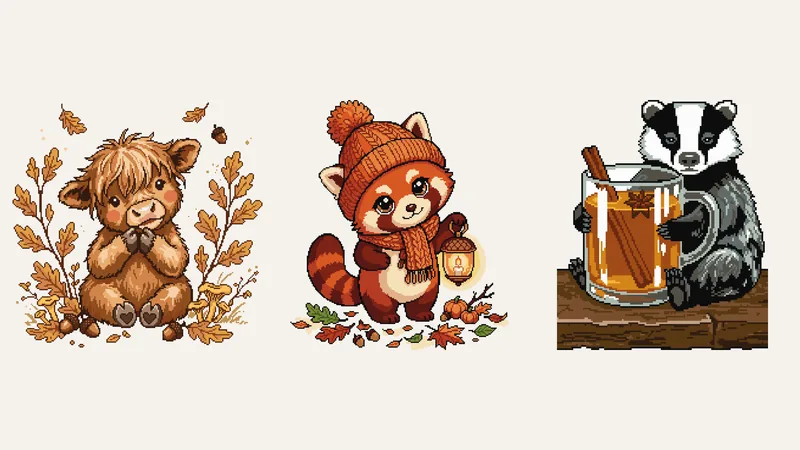
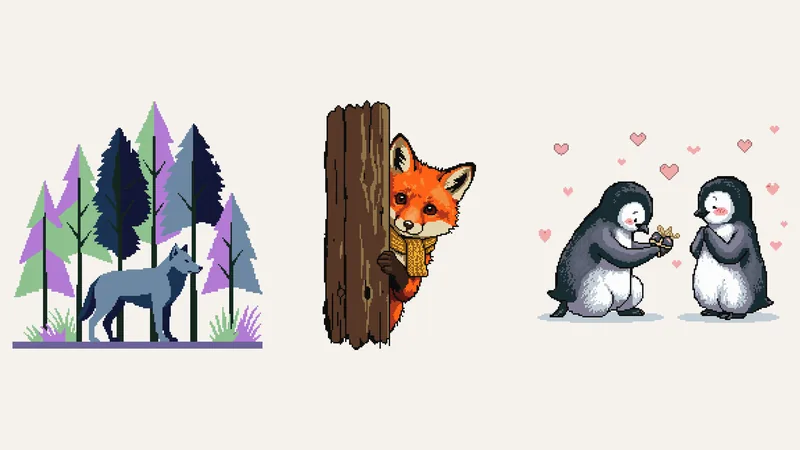
Two charts with similar outer dimensions can be very different amounts of work. The Penguin Proposal finishes at 13.1“ x 10.4“, but 56% of that area is bare fabric, so it’s 11,732 stitches. Badger’s Spiced Brew is smaller — 9.3“ x 11.0“ — yet only 20% is left unstitched, and it comes to 15,818 stitches. Always plan from the total stitch count, which is printed on every pattern page, not from the finished size. Our badger pattern round-up shows the same thing across three badgers: the one with the biggest frame size has the fewest stitches.
To turn stitches into time, don’t trust anyone’s average. Time yourself for one hour on a typical section of the chart, count what you finished, and divide. If you do 150 stitches an hour, the penguins are about 78 hours and the witch kitten about 250. That number tells you whether a project is a winter or a year, and it’s much better to know before you buy the fabric.
Buy All the Floss Up Front, From One Dye Lot
DMC dyes in batches, and two skeins of the same number from different batches can differ slightly. On a small, busy design you’ll never see it. On a large block of one color you will, as a faint line where you switched skeins. The big charts are exactly where that happens: the witch kitten uses 11,767 stitches of DMC 939 (about 7 skeins), our Elf Child and Owl Asleep on the Moon needs about 5 skeins of 312 for its moon, and the wooden door in Red Fox Peeking Around a Door is 6,384 stitches of 839, about 4 skeins.
Buy every skein of your main colors at the same time, from the same shop, and check that the lot numbers on the labels match. Then add one extra skein of each dominant color. A spare costs very little compared to hunting down a matching lot two years in.
Use a Frame That Won’t Crush Your Work
A hoop is fine for small pieces, but on an 18“ design it has to be moved across finished stitching again and again, and it leaves rings that are hard to press out. For anything this size, use a scroll frame (the fabric rolls onto bars at top and bottom) or plastic clip frames like Q-snaps, which you can move without clamping hard over finished work. Either way, take the fabric off the frame when you stop for more than a day.
Stitch in Blocks, and Mark the Chart
Large charts are easy to get lost in. Break the work into 10 x 10 blocks matching the chart’s grid lines — a water-soluble pen or a pre-gridded fabric makes this much easier — and finish one block before moving to the next. Highlight each finished block on a printed copy of the chart. When something doesn’t line up, you only have to recount one block, not half the design. If you’re new to working from a symbol chart, our guide to reading a cross-stitch chart explains the grid and symbols first.
Our Recommendation
For a first project over 15,000 stitches, start with the Wolf in a Pastel Forest. It’s 17,408 stitches, but only 7 colors, and even the smallest color covers 902 stitches, so there are no fiddly single-stitch details and no constant thread changes. It teaches you the habits a big project needs — buying floss up front, stitching in blocks, keeping tension even across large areas — without the extra difficulty of dense shading. Once that’s on the wall, the Red Fox Peeking Around a Door is a good second: about half the stitching is one brown, with all the detail concentrated in the fox. Looking for your next big project by theme? Our round-ups of fall animal patterns, witchy Halloween patterns and nursery patterns include several charts over 15,000 stitches. When you’re finished, our guide to finishing and displaying your piece covers framing at this size.
Join us on Facebook
New free patterns every week, stitching tips, and a place to share what you've made.